

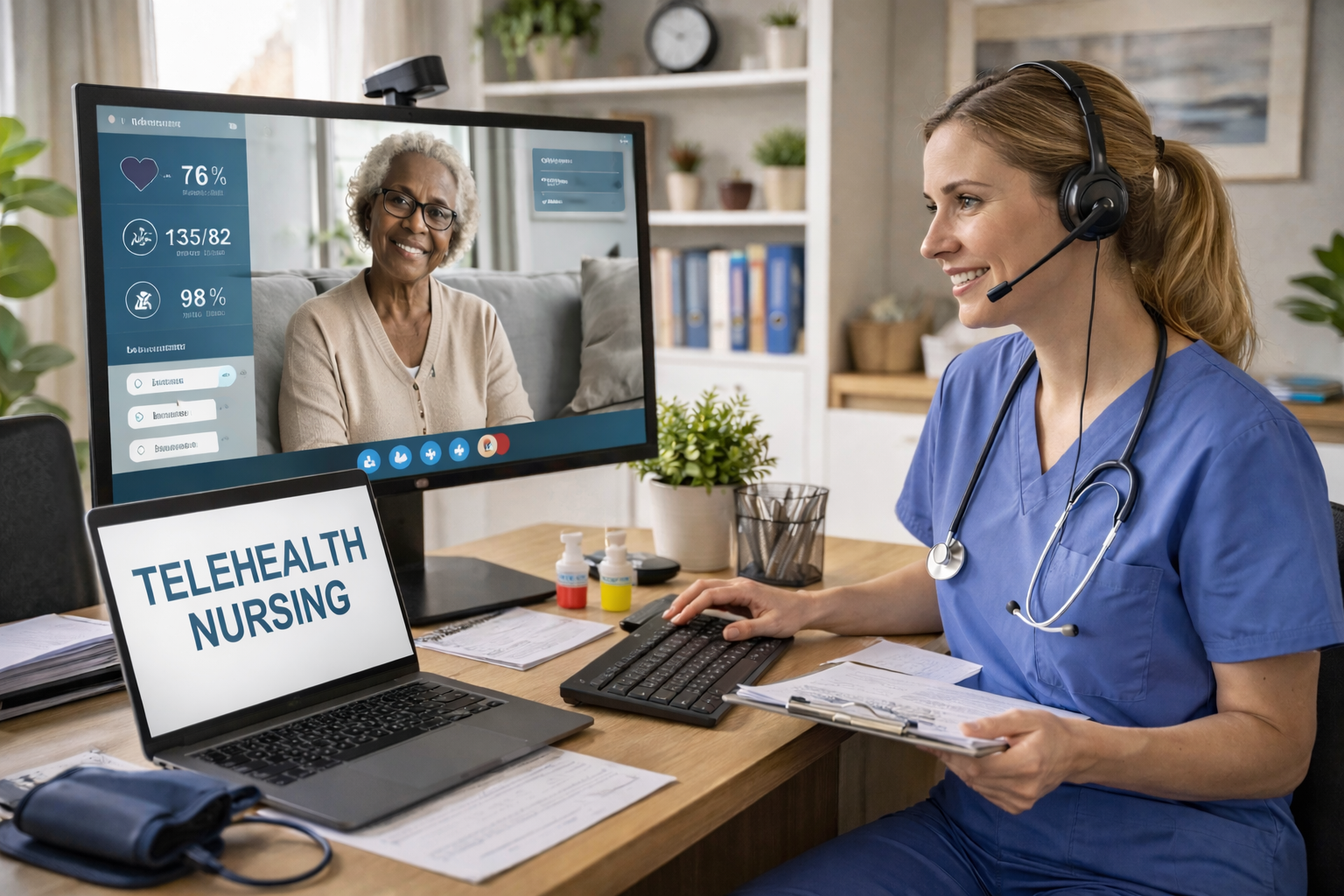
Virtual care has evolved from a pandemic necessity to a cornerstone of modern healthcare delivery. For nurses, this transformation opens exciting new career pathways—but also introduces unique challenges around patient privacy, data security, and HIPAA compliance.
The Rapid Rise of Virtual Nursing
Before 2020, fewer than 1% of patient visits were conducted online. During the early pandemic, virtual appointments jumped to nearly 50% of all outpatient encounters. While usage has stabilized at 13-17% according to the Advancing Health in America (AHA), this still represents a dramatic and permanent shift in how healthcare is delivered.
The financial investment reflects this transformation. According to Deloitte's 2024 survey, U.S. virtual care revenue is expected to reach $100 billion by 2025, with up to $250 billion in current healthcare spending considered virtualizable.
What Virtual Nursing Looks Like in 2026
Today's virtual nurses do far more than video consultations. According to the FutureCare Nursing 2025 survey, 65% of chief nursing officers cited value-based care as a primary catalyst for telehealth adoption. Virtual nursing now encompasses remote patient monitoring, chronic disease management, post-discharge follow-up, and teletriage services.
Major health systems are leading the charge. By mid-2023, 330 hospitals held CMS waivers allowing acute patients to receive care at home while nurses monitor them remotely. Mayo Clinic and Kaiser Permanente invested $100 million to scale Medically Home, an at-home acute care company, after seeing lower readmission rates.
The HIPAA Challenge in Virtual Care
As more patient data is transmitted online, the risks of data breaches increase significantly. According to Grand Canyon University's nursing program research, nurses must "continue to ensure safety and HIPAA compliance" and "make sure the patient is in a safe area where they can talk openly" during telehealth encounters.
The HHS Office for Civil Rights has increased enforcement activities, with 2025 shaping up to be a record year for HIPAA enforcement. The new HIPAA risk analysis enforcement initiative is specifically targeting healthcare organizations—including telehealth providers—for compliance with the HIPAA Security Rule.
Common Telehealth HIPAA Risks Nurses Must Avoid
Virtual nursing introduces unique compliance challenges that traditional bedside nursing doesn't face:
Using non-compliant video platforms for patient consultations can expose PHI to unauthorized access. Discussing patient information in home office settings where family members may overhear violates minimum necessary standards. Storing patient data on personal devices or unsecured cloud services creates significant breach risks. Failing to verify patient identity before virtual encounters can lead to PHI disclosure to the wrong person.
According to research published in the NIH National Library of Medicine, most PHI breaches result from employee negligence rather than external hacking—making proper training essential for all nurses, especially those in virtual roles.
Essential Skills for Telehealth Nurses
Success in virtual nursing requires a combination of traditional clinical skills and new competencies. Digital bedside manner—building trust and empathy through a screen—is now a core nursing skill. Technical proficiency with telehealth platforms, remote monitoring devices, and EHR systems is essential.
Most importantly, telehealth nurses need comprehensive HIPAA training that addresses virtual care-specific scenarios. HIPAA Certify offers HIPAA training specifically designed for nurses that covers clinical workflow scenarios, including the unique challenges of telehealth environments.
The Nurse Licensure Compact: Enabling Cross-State Telehealth
One of the most significant developments supporting telehealth nursing is the Nurse Licensure Compact (NLC). This multistate license agreement allows nurses to practice in participating states without obtaining additional licenses—crucial for telehealth nurses who may care for patients across state lines.
However, NLC participation doesn't eliminate the need for HIPAA compliance. In fact, caring for patients across multiple states increases the complexity of privacy regulations nurses must navigate.
Preparing for a Telehealth Nursing Career
The demand for telehealth-trained nurses continues to grow. According to survey data, 94% of patients who had a virtual health visit were willing to have another—a significant increase from 80% in 2020. This sustained patient demand ensures telehealth nursing positions will remain abundant.
For nurses looking to transition into virtual care roles, combining clinical experience with HIPAA certification demonstrates readiness for the unique responsibilities of telehealth. Visit HIPAA Certify to explore training options that will prepare you for the future of nursing.