

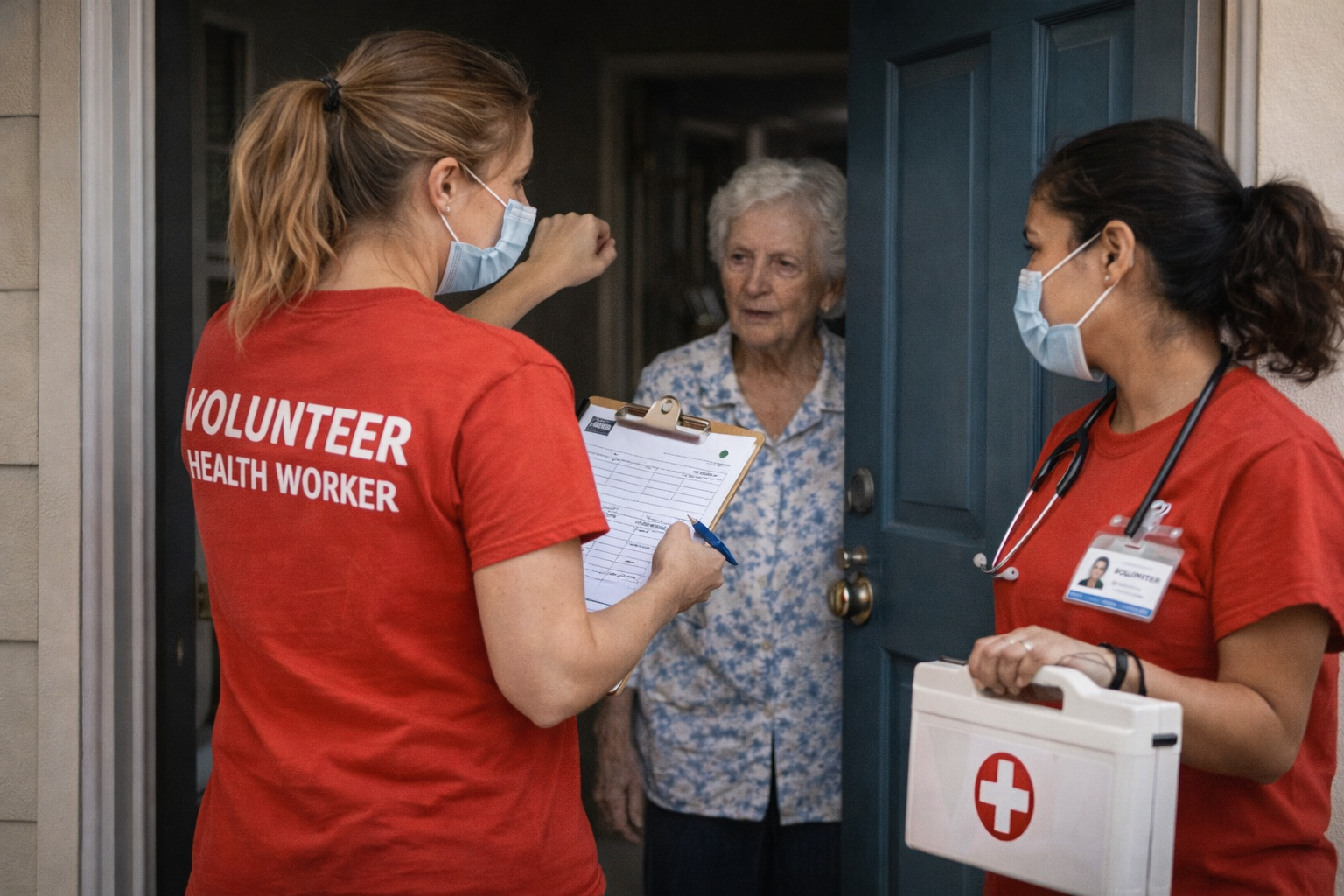
When COVID-19 swept through communities in early 2020, a non-profit serving vulnerable populations across three Southeastern states faced an unprecedented challenge. Their mission to connect elderly and homebound individuals with healthcare resources suddenly required thousands of volunteers to handle sensitive health information. They had 3,200 volunteers ready to knock on doors and make wellness calls. What they didn't have was any way to train them on HIPAA compliance.
Within six weeks, every single volunteer had completed HIPAA training, received certification, and was actively serving their communities—all managed through HIPAA Certify's automated platform. This is how they made it happen.
The Crisis: Scaling Overnight to Meet Community Needs
The organization had operated for fifteen years with a modest volunteer base of around 400 people, primarily helping seniors navigate Medicare enrollment and connecting families with local health services. Their volunteers rarely handled protected health information directly—until the pandemic changed everything.
"Suddenly, we were partnering with county health departments, hospitals, and clinics to conduct wellness checks on isolated seniors," explains the executive director. "Our volunteers were collecting health information, documenting symptoms, coordinating medication deliveries, and scheduling telehealth appointments. We went from minimal PHI exposure to handling sensitive health data for thousands of elderly individuals practically overnight."
The volunteer surge was equally dramatic. Community members desperate to help signed up by the hundreds. Within three weeks, the organization had 3,200 volunteers across 47 counties—retirees, furloughed workers, college students home from closed campuses, and healthcare professionals looking to contribute beyond their regular jobs.
"We had people ready to help, partners counting on us, and elderly community members who needed us," the executive director recalls. "But we couldn't deploy anyone until they understood HIPAA. The liability was too significant, and our healthcare partners required proof of training before they'd share any patient information with our volunteers."
The Challenge: Training a Dispersed, Non-Technical Workforce
The volunteer coordinator faced a logistical nightmare. The volunteers were spread across 47 counties in three states. Many were seniors themselves, with limited technical comfort. In-person training was impossible due to social distancing requirements. And the organization's administrative staff consisted of just twelve people.
"I looked at our options and felt overwhelmed," the volunteer coordinator admits. "Some platforms wanted us to manually create accounts for 3,200 people. Others required volunteers to navigate complicated registration processes. We needed something so simple that an 80-year-old volunteer checking on their neighbors could figure it out without calling us for help."
The training content itself was another concern. Generic corporate HIPAA training wouldn't resonate with community volunteers knocking on doors. They needed material that addressed their specific situations—what to do when a neighbor shares health concerns on a doorstep, how to handle medication information during a wellness call, when to escalate concerns to healthcare partners.
The Solution: Ease From Day One
The volunteer coordinator discovered HIPAA Certify through a recommendation from a county health department partner. What caught their attention was the HIPAA training specifically designed for community health workers—training built for exactly the kind of outreach their volunteers would be doing.
"The ease of the platform was immediately apparent," the volunteer coordinator says. "I uploaded our volunteer list from a spreadsheet export of our volunteer management system. Within an hour, every volunteer had received an email with a personal link to their training. No accounts to create, no passwords to remember, no complicated login processes. They clicked the link and started learning."
The training content itself was designed for community health workers, not corporate employees. Scenarios addressed real situations: a volunteer calling to check on an elderly resident who mentions chest pains, a door-to-door wellness check where a family member wants to discuss a neighbor's condition, documentation practices when coordinating with healthcare providers.
"Our volunteers told us it felt relevant," the executive director notes. "They weren't sitting through training about hospital policies that didn't apply to them. They were learning exactly what they needed to know for the work they'd actually be doing."
Automation That Saved Hundreds of Staff Hours
With only twelve staff members managing 3,200 volunteers, the organization couldn't afford to manually track training completion. The automation built into HIPAA Certify proved essential.
"The platform handled everything we would have spent weeks doing manually," the volunteer coordinator explains. "Automated reminder emails went out to volunteers who hadn't started their training. Follow-up reminders escalated for those who started but didn't finish. Certificates generated automatically upon completion and were emailed directly to volunteers. We didn't touch any of it—the system just ran."
The automation extended to ongoing volunteer management. When new volunteers signed up through the organization's online registration system, they automatically received HIPAA training assignments. When volunteers completed training, the system automatically updated their status. When annual recertification came due, the platform triggered the process without staff intervention.
"We calculated that we saved approximately 400 staff hours during that initial six-week push," the volunteer coordinator says. "Hours we would have spent sending individual emails, tracking spreadsheets, generating certificates manually, and fielding phone calls from confused volunteers. Instead, our team focused on actually coordinating outreach activities."
Integration With Existing Systems
The organization used a volunteer management platform to coordinate their workforce. The ability to integrate HIPAA Certify with their existing system proved crucial for maintaining a single source of truth about volunteer readiness.
"We set up a simple integration using the CSV export and import features," the volunteer coordinator explains. "Every week, I'd export new volunteers from our management system and import them into HIPAA Certify—a process that took about five minutes. Training completion data synced back to our volunteer records, so coordinators could instantly see which volunteers were cleared for deployment."
The integration also supported the organization's partnerships with healthcare organizations. County health departments and hospital partners needed verification that volunteers had completed HIPAA training before sharing patient contact lists for wellness checks.
"We could generate a verification report in seconds showing exactly which volunteers were HIPAA-certified," the executive director says. "Our partners trusted us because we could prove our volunteers were trained. That trust opened doors—literally—to partnerships that let us serve thousands more seniors than we could have reached on our own."
Reports That Satisfied Partners and Funders
As a non-profit, the organization operated on grant funding that required detailed compliance documentation. Their healthcare partners had their own reporting requirements. The reporting capabilities in HIPAA Certify addressed both needs.
"The dashboard gave us real-time visibility into training completion across all 47 counties," the volunteer coordinator says. "I could see completion rates by region, identify areas where volunteers were lagging, and drill down to individual volunteer status. During our initial push, I checked the dashboard every morning to see overnight progress."
For grant reporting, the platform generated comprehensive documentation showing training completion rates, assessment scores, certification dates, and attestation records. When funders asked for proof that the organization maintained HIPAA compliance across their volunteer workforce, the reports were ready instantly.
"We secured additional funding specifically because we could demonstrate robust compliance infrastructure," the executive director reveals. "One foundation told us they'd never seen a volunteer organization with such thorough HIPAA documentation. That credibility translated directly into resources we could use to expand our programs."
The Results: Community Impact at Scale
Six weeks after implementing HIPAA Certify, the organization had achieved full HIPAA training compliance across their volunteer workforce. The numbers reflect the scale of their accomplishment:
3,200 volunteers trained and certified. 47 counties across three states covered. 400+ staff hours saved through automation. 12 healthcare organization partnerships enabled. 28,000+ wellness checks conducted in the first three months. Zero HIPAA incidents reported despite high-volume PHI handling.
"The real measure of success isn't the training numbers—it's the seniors we were able to help," the executive director reflects. "Every one of those 28,000 wellness checks represented an elderly person who might otherwise have been isolated and forgotten during the worst of the pandemic. HIPAA training made those connections possible by giving our partners confidence that their patients' information was protected."
Beyond the Pandemic: Sustainable Compliance
The pandemic surge has subsided, but the organization continues using HIPAA Certify to maintain their compliance infrastructure. Their volunteer base has stabilized at around 1,800 active volunteers, with new recruits automatically receiving HIPAA training as part of their onboarding process.
"What started as crisis response became operational excellence," the volunteer coordinator says. "We now have infrastructure that supports our mission permanently. When the next public health challenge comes—and it will—we'll be ready to scale again."
The organization has also expanded their use of the community health worker training modules to cover additional topics—privacy practices for home visits, secure communication methods, and documentation standards for coordinated care programs.
Advice for Other Non-Profits
For other non-profits considering HIPAA training for volunteers or community health workers, the executive director offers straightforward guidance:
"Don't assume HIPAA doesn't apply to you because you're not a hospital. If your volunteers handle any health information—even just coordinating appointments or documenting wellness checks—you have compliance obligations. And don't assume your volunteers can't handle training. With the right platform, people of all ages and technical abilities can complete HIPAA training successfully."
The volunteer coordinator adds a practical note: "Look for automation and ease above all else. Non-profits don't have dedicated compliance departments. You need a platform that runs itself so you can focus on your mission. HIPAA Certify gave us exactly that."
Ready to train your community health workers or volunteers on HIPAA? Visit HIPAA Certify to explore the community health worker training program and see how their automated platform can scale with your organization's mission.